What Every Small Business Needs to Know About Search and AI in 2026
If you haven't looked at your digital marketing strategy lately, now is the time. Search has changed more in the last two years than in the previous decade — and the businesses that understand what's happening are going to have a significant edge over the ones still playing by 2022 rules.
The good news: you don't need a big marketing budget or a dedicated team to stay ahead. You need a clear picture of what's changed, what matters most, and where to focus your energy.
Here's what every small business owner should know about building a strong online presence in 2026.
The Biggest Shift: AI Is Now Answering Searches
For years, the goal of SEO was simple: show up on page one of Google. That's still important — but it's no longer the whole picture.
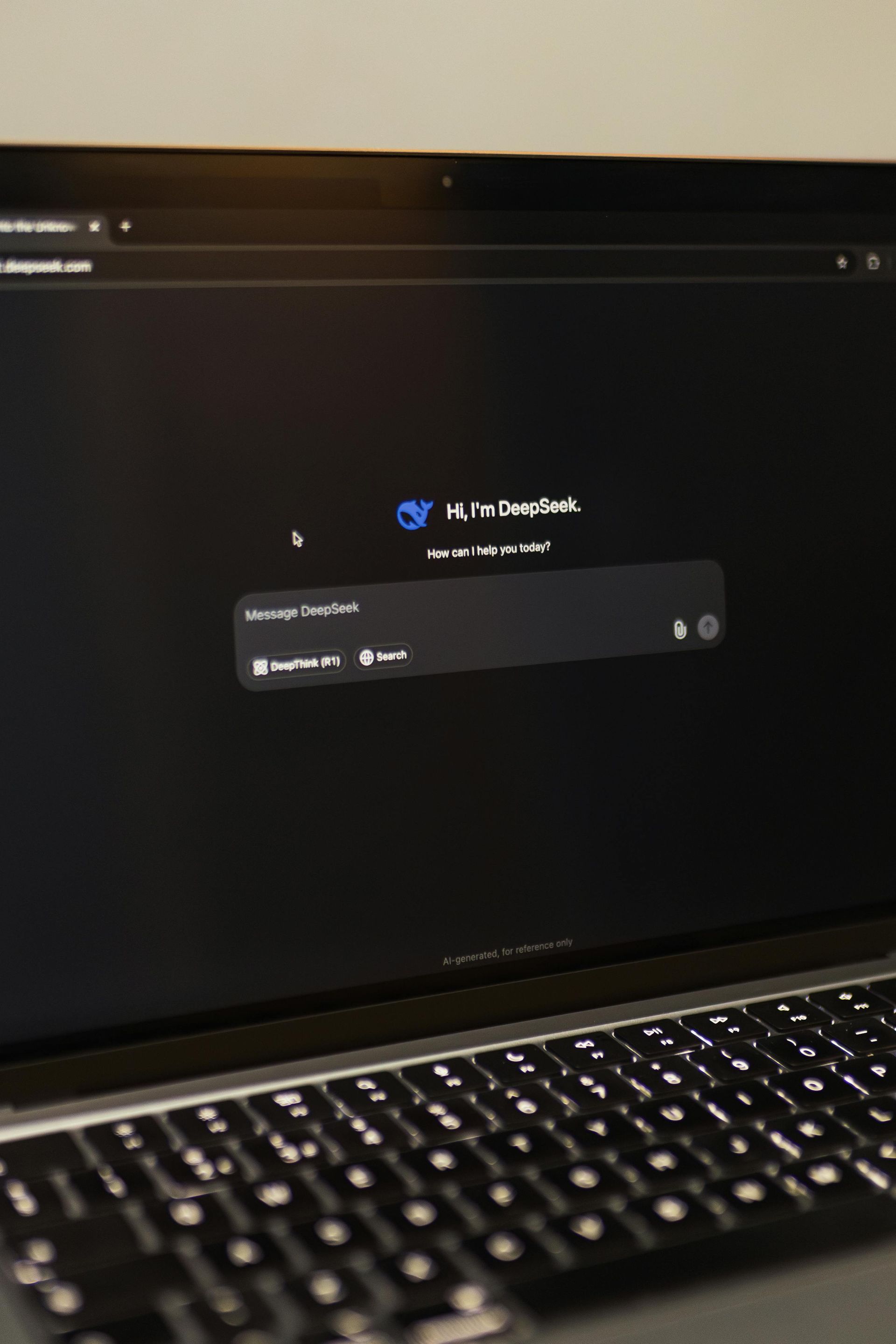
AI-powered tools like ChatGPT, Google's AI Overviews, Perplexity, and Gemini are fundamentally changing how people find information online. Instead of clicking through a list of links, users are increasingly getting direct, synthesized answers. They ask a question; the AI gives them a response — often without ever sending them to a website.
What does that mean for your business? It means that getting found online now requires two things: showing up in traditional search results and being the business that AI tools recommend when someone asks a relevant question.
That second part — optimizing for AI recommendations — is called Answer Engine Optimization (AEO) , and it's one of the most important things you can invest in right now.
What Is AEO, and Why Does It Matter for Small Businesses?
Answer Engine Optimization is the practice of structuring your website content so that AI tools can understand, trust, and surface your business in relevant queries.
Think of it this way: when someone asks ChatGPT "What's the best plumber in Denver?" or "Who does custom wedding cakes near me?", the AI is pulling its answer from somewhere. It's looking at websites, business profiles, reviews, and other credible sources — then synthesizing that information into a recommendation. AEO is about making sure your business is in that pool of trusted sources.
Here's what AEO looks like in practice for a small business:
Clear, direct content. Your website should answer the questions your customers are actually asking — in plain language, without burying the answer in fluff. AI tools scan for clear, concise responses they can summarize and surface. Vague, keyword-stuffed pages no longer work.
Structured data and schema markup. This is technical shorthand that helps AI systems understand what your website is about — your services, your location, your hours, your reviews. A well-built website handles this automatically.
Consistent business information everywhere. Your name, address, phone number, and hours need to be identical across your website, Google Business Profile, social media, and any directories you're listed in. Discrepancies confuse AI tools and hurt your visibility.
Topical authority. AI systems favor businesses that demonstrate deep expertise in their area. That means having content that thoroughly covers your services — not just a generic homepage that vaguely mentions what you do.
Traditional SEO Still Matters — But It's Evolved
Don't make the mistake of abandoning traditional SEO in favor of chasing AI algorithms. Google is still the dominant search engine by a wide margin, and ranking well in organic results remains one of the most valuable things you can do for your business. The good news: a lot of what makes you visible in Google also makes you visible in AI tools. They overlap far more than they conflict.
But SEO in 2026 looks different than it did even two years ago. Intent over keywords is the new standard. Search engines have gotten very good at understanding what someone actually wants — not just the words they typed. Write like a human being who genuinely wants to help. That's what ranks.
Mobile performance is non-negotiable. Most local searches happen on mobile devices. If your website is slow, hard to navigate, or doesn't display properly on a phone, you're losing customers before they even find out what you offer. Page speed is a ranking factor, a conversion factor, and a trust signal.
Foundational technical SEO — clean site structure, HTTPS security, logical internal linking, and accurate structured data — are no longer "nice to have." They're the baseline for being considered credible by search engines. And reviews and third-party mentions matter more than ever. Search engines and AI tools both use signals from outside your website to evaluate your authority. Earning positive reviews and getting your business mentioned in legitimate third-party sources strengthens your visibility across the board.
Your Google Business Profile Is More Important Than Ever
If you do nothing else after reading this post, make sure your Google Business Profile is complete, accurate, and actively maintained. Your GBP is one of the primary sources AI-powered local search uses to understand and recommend local businesses — when someone asks an AI tool about businesses in your area, your GBP is often one of the first places it looks.
Treat it like an active extension of your business, not a set-it-and-forget-it listing. Keep your hours, phone number, address, and website current. Add photos regularly — businesses with recent photos get more engagement and signal to Google that the profile is active. Post updates on promotions, new services, and seasonal offers. Respond to every review, positive and negative. And use specific service categories so search and AI tools can match you to the right queries.

The Most Effective Digital Marketing Tactics for Small Businesses in 2026
With so much noise in the digital marketing space, it can be hard to know where to focus. Here's the honest answer: not every tactic is worth your time. These are the ones that actually move the needle — and are manageable for a small business without a dedicated marketing team.
1. A High-Performance Website as Your Foundation
Everything else you do online — social media, advertising, email, reviews — points people back to your website. If your website is slow, outdated, or hard to navigate, you're undermining every other marketing effort you make. A well-built, fast, mobile-optimized website that's connected to your business systems is still the single most important investment you can make in your online presence. Get this right first, and everything else gets easier.
2. Content That Answers Real Questions
You don't need to publish blog posts every week. But having a handful of well-written pages and posts that answer the questions your customers actually ask — "How much does X cost?", "What's the difference between X and Y?", "Do you serve [city]?" — builds the kind of topical authority that both search engines and AI tools reward. Write it once. Let it work for you for years. This kind of evergreen, question-answering content is exactly what AI tools pull from when generating recommendations.
3. Social Media as a Visibility Amplifier
Social media platforms are increasingly functioning as search engines in their own right — and the signals they generate (engagement, branded searches, traffic) strengthen your authority in traditional search as well. You don't need to be everywhere. Pick one or two platforms where your customers actually spend time, and show up there consistently. Even a few posts a week add up over time. Repurpose your blog content, share behind-the-scenes moments, and answer common questions in your captions.
4. Email Marketing — Still Underrated
Email is one of the highest-ROI marketing channels available to small businesses, and it's entirely within your control — no algorithm changes, no platform shifts, no pay-to-play. If you're not building an email list, start now. A simple monthly newsletter with useful content, offers, and updates keeps your business top of mind with people who have already expressed interest in what you do. It's direct, personal, and remarkably effective for its cost.
5. Reviews — Your Word-of-Mouth in the Digital Age
Reviews are trust signals for customers and authority signals for search engines and AI tools. The best time to ask for a review is right after a great experience — when the customer is happy and the interaction is fresh. Make it easy: send a direct link to your Google review page. Even a steady trickle of new reviews has a meaningful impact on your local visibility over time. And when you respond to every review publicly, you signal to both customers and AI tools that you're an active, engaged business that cares about its reputation.
The Bottom Line
Search and AI are evolving fast — but the fundamentals of a strong online presence haven't changed as much as the headlines suggest. Be easy to find. Be credible. Be clear about what you do and who you serve. Make it easy for customers to take the next step.
What has changed is where and how people look — and making sure your business shows up in those new places requires a website and a strategy that's built for how the web works today, not how it worked five years ago.
If you're not sure whether your current website and online presence are keeping up, that's exactly the kind of thing we help small businesses figure out at Divscape. Book a free intro call and we'll take a look together — no pressure, no commitment, just a real conversation about where you stand and what's possible.
Recent Posts